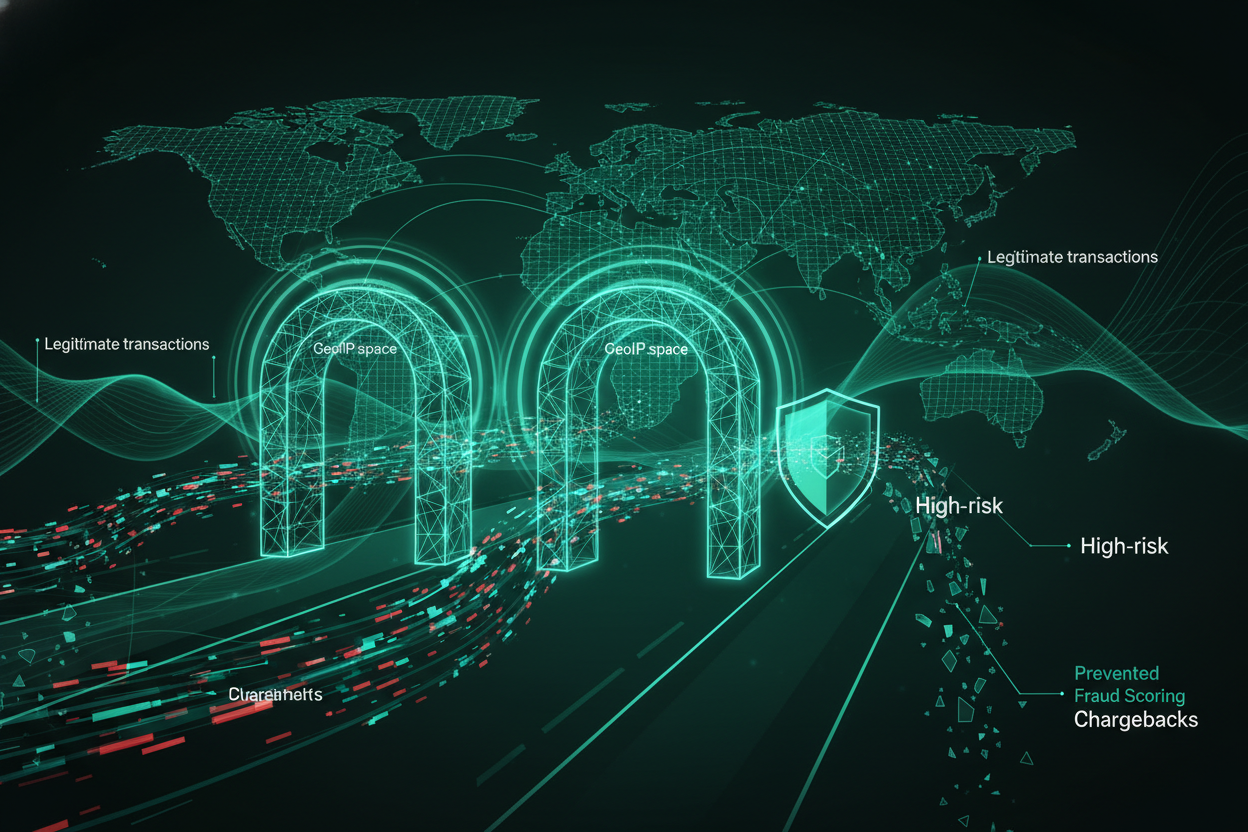
Chargeback Prevention with Geolocation Signals: A Case Study and Implementation Guide
Introduction: The Chargeback Problem
Chargebacks remain one of the most persistent challenges for businesses operating online. Beyond the financial loss, chargebacks can result in reputational damage, penalties from payment processors, and strained customer relationships. For some industries, chargebacks can escalate to debilitating levels, causing businesses to lose merchant accounts or enter excessive chargeback programs.
While many traditional solutions focus on post-transaction analysis, modern antifraud architectures increasingly leverage preventive measures—particularly geolocation signals—to identify and thwart high-risk transactions before they lead to disputes. In this article, we’ll explore how to integrate geolocation signals into your chargeback prevention strategy, illustrated through a practical case study and actionable steps.
Case Study: Preventing Chargebacks for a Digital Subscription Service
Background
A subscription-based streaming company, "StreamCo," faced consistent issues with chargebacks—especially from users leveraging stolen credit card information. Typically, these chargebacks were filed under "unauthorized transactions." However, their payment flow lacked robust preventive checks against location-based discrepancies during initial transactions.
Initial Problem Statement
StreamCo observed that 40% of all chargebacks occurred where the cardholder’s billing address and IP location did not match—or the transaction originated from high-risk geolocations known for fraud.
Approach to Solution
The development team at StreamCo implemented GeoIP.space's geolocation API to enrich payment intelligence with location-based signals. These signals fed into their real-time fraud scoring system to prevent high-risk transactions, reducing chargeback rates for streamlined operations.
The Solution Workflow
- Step 1: Capture and Log Transaction-Level Geo Data: At payment initiation, StreamCo identified the IP address and device fingerprint. Using GeoIP.space, they extracted country, region, city, and ASN data.
- Step 2: Geo-Billing Address Matching: Geo data from the user’s IP was compared to the billing address provided during checkout. Discrepancies triggered additional verification layers.
- Step 3: High-Risk Country Blocking: Countries identified as high-risk were flagged, and transactions from those regions either required manual approval or were outright denied based on StreamCo’s risk tolerance.
- Step 4: ASN Monitoring: Transactions from suspicious autonomous system numbers (ASNs), such as known hosting providers or proxy networks, were flagged for stepped-up verification.
- Step 5: Post-Prevention Metrics: Transaction-level logs integrated geography-based fraud signals into analytical dashboards for post-hoc review and ongoing improvements.
Why Geolocation for Chargeback Prevention?
Geolocation data offers unique insights that cannot be gathered through traditional fraud prevention measures alone. Here are some ways it helps:
- IP and Billing Mismatches: Fraudulent users often cannot align IP-based locations with the billing address of stolen credit cards.
- Impossible Travel Detection: Transactions occurring outside a user’s typical geographical footprint raise suspicion. (See related: How to build impossible travel detection with GeoIP and user_id.)
- Proxy and TOR Usage: Identifying transactions originating from masked locations—such as through proxies or VPNs—is critical to flagging fraud attempts.
- High-Risk Location Alerts: Some regions are heavily associated with fraudulent traffic. Dynamically filtering transactions from flagged geographies mitigates risks significantly.
Implementation Plan: Adding GeoIP.space to Your Payment Stack
Prerequisite Setup
Before implementation, obtain your API credentials from GeoIP.space. If you don’t yet have an account, you can sign up here.
Step-By-Step Integration
- Install GeoIP.space SDK: Begin by including the GeoIP client library into your application’s stack. For example, if using Node.js:
- Capture Client IP Addresses: Ensure your payment flow captures the end-user’s IP address. For example, in Node.js:
const ip = request.headers['x-forwarded-for'] || request.connection.remoteAddress; - Send IP Address to GeoIP.space: Use the client library or API call to extract location-based metadata:
- Build Location Rules: Establish decision-making thresholds based on your business. For instance:
- Flag transactions where billing and IP country are not identical.
- Block transactions from blacklisted countries or ASNs.
- Use latitude/longitude for regional validations.
- Log Enrichment Data: Maintain a secure log of transactions, including enriched geodata, for post-mortem analysis and monitoring.
npm install geoip-space-sdk
const geoData = geoip.lookup(ip);
console.log(geoData);
/* Example response:
{
  country: 'US',
  region: 'CA',
  city: 'San Francisco',
  latitude: 37.7749,
  longitude: -122.4194,
  ASN: 'AS12345',
  org: 'Some ISP'
}
*/
Checklist: Geo-Signal Best Practices for Chargeback Prevention
- Always store geolocation metadata in compliance with GDPR and regional data protection laws.
- Update blocks for high-risk geographies and ASNs dynamically using your transaction logs.
- Regularly review transaction data for false positive cases to fine-tune your prevention logic.
- Incorporate geolocation intelligence with your user_id tracking for a multi-dimensional fraud model (see related: How to detect multi-account farms using user_id linkage and IP graph heuristics).
Anti-Patterns to Avoid
While adopting geo-signals, it's also critical to recognize common mistakes:
- Over-reliance on Country Data: Exclusively blacklisting or whitelisting transactions based on country codes often neglects nuanced regional, ISP, or ASN factors.
- Ignoring Proxy Traffic: Failing to flag proxy providers can allow fraudsters to bypass superficial location checks.
- No Manual Review Mechanism: Automatically rejecting all flagged transactions can lead to false positives, harming legitimate customers.
Conclusion: Geolocation Signals as Your Chargeback Prevention Ally
By introducing geolocation signals into your payment fraud defenses, businesses can proactively identify and neutralize high-risk transactions. As the StreamCo case study illustrated, effective use of GeoIP.space helped measurably reduce chargeback disputes and created a more secure transaction ecosystem.
Ready to elevate your chargeback prevention strategy? Get started with GeoIP.space today and unlock the true capabilities of location-based fraud detection.
Related reads
Advanced Use Cases for GeoIP.space in Chargeback Prevention
While the basic integration of geolocation signals with payment systems can significantly reduce chargeback risks, advanced use cases leveraging GeoIP.space provide even greater control and insights. Here are some strategies to enhance the effectiveness of GeoIP.space:
1. Dynamic Risk Scoring
Rather than applying static rules, businesses can implement dynamic risk scoring models by combining geolocation metadata with other transaction attributes. For example:
- Assign higher risk scores for mismatches between billing and shipping regions that also include high-risk IP ASNs.
- Incorporate time zone discrepancies relative to the transaction timestamp to detect potential fraud patterns.
- Use frequency analysis—multiple transactions from the same IP over short time frames may indicate a bot attack.
This approach ensures a more nuanced way to identify high-risk transactions without unnecessarily rejecting legitimate customers.
2. Real-Time Geolocation Alerts
Integrating GeoIP.space with event-driven architecture allows for instant alerts and actions when suspicious geolocation behaviors occur. For instance:
- Trigger a secondary authentication process or CAPTCHA if a transaction originates from a flagged IP range.
- Send notifications to manual review teams upon detection of high-risk geolocation patterns, such as regions known for phishing attacks.
- Implement automated email alerts to inform users when their accounts are accessed from unusual locations.
This proactive step ensures customer accounts are secured quickly, reducing unauthorized transactions and subsequent chargebacks.
3. Multi-Layer Geolocation Data Analysis
Beyond IP-based geolocation, layering additional data improves chargeback prevention. For example, GeoIP.space's data can be combined with:
- Device Fingerprinting: Link geolocation data to unique device identifiers. If the same device appears in multiple geographies within a short period, flag the activity as suspicious.
- Behavior Metrics: Compare user behavior (e.g., page navigation and hover times) with the geolocation to identify anomalies typical of fraud attempts.
- Historical Fraud Patterns: Enrich your models with data on regions or ASNs implicated in previous chargeback cases.
Combining these datasets generates a comprehensive fraud prevention system that adapts to evolving threats.
4. Geo-Triggered Customer Experience Adjustments
Adapting how your platform interacts with users based on their geolocation signals can prevent chargebacks while maintaining customer satisfaction. Examples include:
- For high-risk geographies, offer payment-on-delivery options or request additional government-issued ID verification.
- Use IP geolocation to pre-select regions or languages during checkout for legitimate users, reducing errors and disputes.
- Create frictionless workflows for users in regions with historically low fraud rates by fast-tracking their transactions.
These measures enhance the overall user experience while keeping unnecessary friction minimal.
5. Geographical Dispute Resolution Insights
When disputes or chargebacks do occur, GeoIP.space provides valuable logs for analyzing these events. Practical applications include:
- Providing evidence to dispute unjust chargebacks by comparing the IP geolocation of a transaction with the customer's claimed location.
- Identifying trends in chargeback origin points that signal new fraud hotspots.
- Establishing regional fraud metrics to enhance ongoing rule tuning and fraud scoring adjustments.
This deeper level of investigation improves your success rate in fighting wrongful chargebacks.
Optimization Tips for Seamless GeoIP Integration
To ensure GeoIP.space integration fits your system flawlessly, consider the following optimization techniques:
Data Caching for High-Volume Environments
Frequent API calls can introduce latency in high-transaction systems. Mitigate this by caching geolocation results for recurring IPs over a defined period. For instance:
- Cache geolocation data for up to 24 hours, allowing frequent users to complete transactions without delays.
- Implement region-specific TTL adjustments—shorter for dynamic proxies and longer for static residential IPs.
Asynchronous Fraud Checks
Reduce checkout flow delays by performing geolocation fraud checks asynchronously. Here's how:
- Allow the payment process to complete, and only hold transactions showing suspicious patterns for manual review.
- Send users confirmations instantly while processing advanced fraud checks in the background.
This technique minimizes customer frustration while maintaining security controls.
Balancing Automation and Human Oversight
Even with robust geolocation rules, some edge cases require manual intervention to avoid revenue loss from false positives. Strategies for successful oversight include:
- Segment flagged transactions by risk level to prioritize human reviews efficiently.
- Empower review teams with detailed GeoIP.space logs, enabling informed decisions.
- Use review findings to refine automation rules continually, optimizing for both accuracy and efficiency.
Scaling GeoIP.space Across Global Operations
For businesses operating globally, scaling GeoIP.space integration effectively ensures uniform fraud prevention standards. Key considerations include:
- Regional Customization: Tailor rules based on regional fraud trends, such as high-risk ASNs in South Asia or Eastern Europe.
- Cross-Border Payment Adaptations: Use geolocation data to dynamically apply currency conversion and tax rate calculations, preventing checkout disputes.
- Team Training: Train compliance and fraud teams to interpret enriched geolocation data, ensuring consistent responses across regions.
By leveraging GeoIP.space to its full potential, businesses can not only prevent chargebacks but also optimize global transaction processes, boosting both revenue and customer trust.
Next step
Run a quick API test, issue your key, and integrate from docs.